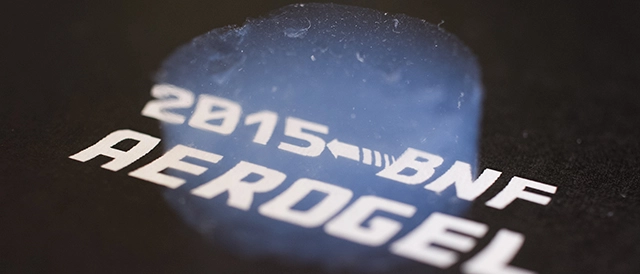
Aerogels are porous materials in which gas occupies most of the space between fine solid skeleton elements. Their high void fraction gives low bulk density, low thermal conductivity, and high specific surface area. Silica aerogel is a representative example combining a translucent appearance with strong thermal insulation. [1]
About aerogels
The IUPAC Gold Book defines an aerogel as a gel comprising a microporous solid with gas as the dispersed phase. [2] The material retains a gel-derived three-dimensional network while its internal liquid is replaced with gas. Conventionally, the term refers to low-density dried gels obtained by supercritical drying.
Aerogel describes a structure rather than a specific compound. Aerogels can be prepared from silica (SiO₂), organic polymers, carbon, alumina (Al₂O₃), titania (TiO₂), and other substances. Applications under investigation include insulation, electrodes, and catalyst supports. Retention of the gel-derived network is central to the structure. [3–4]
Gels dried by evaporation are called xerogels, whereas those obtained by freeze-drying are called cryogels. Aerogels have been known for more than 90 years and can be prepared using supercritical-drying equipment. [5,6]
Distinguishing related terms
Low density alone does not justify describing a xerogel, cryogel, or foam as an aerogel.
During evaporative drying, liquid–gas interfaces form within the pores. Capillary forces arising from surface tension tend to shrink and densify the skeleton. Materials dried by evaporation should therefore not be assumed equivalent to conventional aerogels, even when they share a precursor.
Freeze-drying avoids liquid–gas interfaces, but the growth of ice or solvent crystals can produce micrometer-scale pores and anisotropic structures. The resulting structures and properties can differ substantially from those obtained by supercritical drying.
Foams contain bubbles dispersed within a liquid, solid, or gel. Lightweight structures produced by foaming agents, introduced bubbles, phase separation, or template removal follow different formation principles from aerogels with nanometer-scale gel skeletons and pores.
History of aerogels
S. S. Kistler reported aerogels in 1931. Replacing the liquid within a gel with gas yielded a low-density dry material with limited shrinkage. Early studies included silica, alumina, tin oxide, gelatin, agar, and cellulose. [7]
Silica aerogels were subsequently studied as low-density materials, thermal insulation, and low-refractive-index materials, and commercial products appeared in the 1950s. [8,9] From the 1960s onward, methods using silicon alkoxide precursors such as TMOS and TEOS developed through control of hydrolysis and polycondensation to form uniform silica networks. [10]
Applications in Cherenkov detectors and transparent insulation windows were explored in the 1970s and 1980s. From the 1990s onward, research expanded to hydrophobic silica, resorcinol–formaldehyde, organic-polymer, and carbon aerogels. [11–12] Since the 2000s, organic–inorganic hybrids and composites incorporating fibers, graphene, carbon nanotubes, and cellulose nanofibers have also been actively investigated. [13]
Properties of silica aerogels
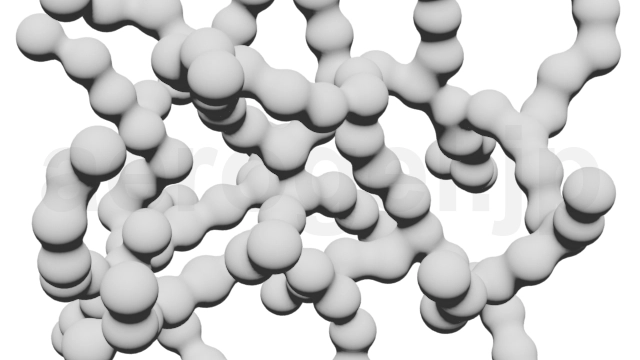
Appropriately prepared silica aerogels are self-supporting solids with low bulk density, high porosity, low thermal conductivity, and visible-light transmission. Their skeleton comprises nanometer-scale silica particles or a silica network, with numerous pores between the skeleton elements.
A silica aerogel consists of nanometer-scale silica particles or a silica network separated by numerous pores, resulting in a high void fraction. This microstructure suppresses energy exchange between gas molecules within the structure and limits heat conduction through the solid skeleton.
When the skeleton and pores are sufficiently smaller than visible-light wavelengths, scattering is reduced and the material appears translucent or nearly transparent. However, the low-density silica skeleton is vulnerable to compression, bending, impact, and abrasion, leading to cracking and powder shedding.
Thermal insulation mechanism
Heat transfer through aerogels includes gas conduction, solid conduction, and radiation. Air confined within small pores behaves differently from free air. In pores comparable to or smaller than the mean free path of air molecules (approximately 70 nm), energy exchange through molecular collisions is suppressed, reducing gas conduction.
The thin solid skeleton also limits solid conduction. Reducing the skeleton fraction too far enlarges pores and increases gas conduction and radiative transfer, whereas increasing density raises solid conduction. An optimum bulk density therefore exists; approximately 0.15 g cm⁻³ is a guide for silica aerogels near room temperature.
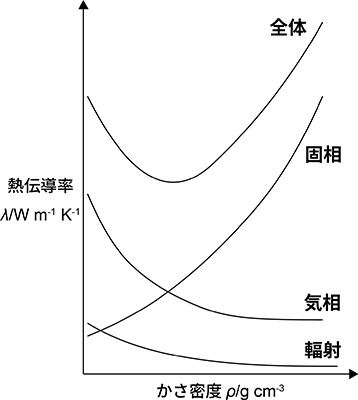
Silica-aerogel insulation is primarily optimized near room temperature. Radiative heat transfer increases at high temperature, while gas conductivity and molecular mean free path decrease at low temperature, reducing the relative advantage of silica aerogels. Reports combining ultralow density with high insulation performance should be checked for measurements conducted in accordance with standards such as JIS A 1412-1 or JIS A 1412-2.
Visible-light transmission
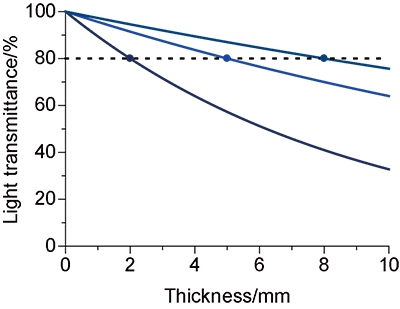
Silica aerogels have been investigated for transparent insulation and low-refractive-index applications because scattering decreases when skeleton and pore dimensions are sufficiently smaller than visible-light wavelengths (380–780 nm). Transparency depends strongly on skeleton size, pore diameter, bulk density, thickness, and surface condition. Coarser structures appear cloudy, and transmittance decreases exponentially with thickness.
Appropriate compositions provide visible-light transmittance of approximately 90% at a thickness of 10 mm. Well-controlled microstructures appear blue in transmission because of Rayleigh scattering, but their transmittance does not reach that of window glass or acrylic.
Gel preparation and supercritical drying
Aerogels are generally prepared by forming a wet gel through sol–gel chemistry and then performing supercritical drying. Conventional drying produces liquid–gas interfaces within the pores. The resulting capillary forces can exceed the strength of the low-density skeleton and cause shrinkage or collapse.
Supercritical drying replaces water or organic solvent within a gel with a supercritical fluid before drying. Carbon dioxide, commonly used for this purpose, becomes supercritical above 31.1 °C and 7.4 MPa. The absence of a liquid–gas interface avoids substantial surface-tension forces and helps preserve the gel’s shape and microstructure.
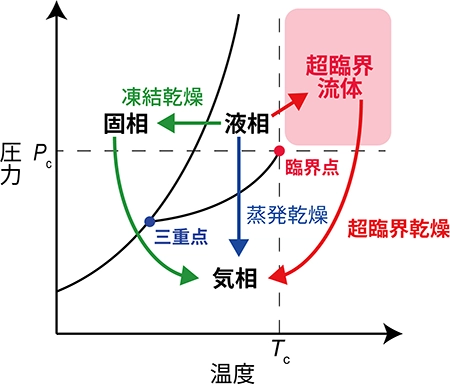
Freeze-drying also avoids surface-tension effects, but crystallization during freezing can disrupt the pore structure. In general, matching the low thermal conductivity and visible-light transmission of supercritically dried materials is difficult.
Example preparation of silica aerogel
Silica aerogels can be prepared using supercritical-drying equipment. A simple example follows.
- Add 5 mL of TMOS to 10 mL of 5 mM aqueous nitric acid and stir for 10 minutes.
- Leave the mixture undisturbed for 4 days for gelation and aging. Increasing the temperature accelerates the reaction.
- Wash the wet gel to remove the aqueous solution and unreacted species, then exchange the liquid with a solvent compatible with supercritical CO₂, such as 2-propanol or n-hexane.
- Flow carbon dioxide through the system, increase pressure and temperature, and perform supercritical drying.
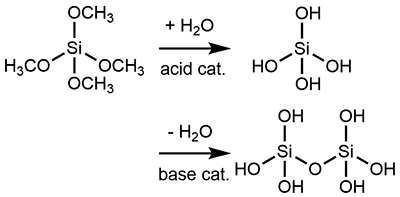
This procedure gives an insulating, transparent aerogel with a bulk density of approximately 0.15 g cm⁻³. Solvent and catalyst amounts can be adjusted to control density and transmittance. The material contains interconnected amorphous particles approximately 10 nm in diameter, but weak interparticle necks make it fragile.
Hydrophobization
Silica aerogels prepared by this method are hygroscopic and may gradually change in ambient air. Reducing hydrophilic silanol (Si–OH) groups through hydrophobization improves handling stability.
Before supercritical drying, gels are commonly immersed in organic-solvent solutions containing HMDS, TMCS, or silane coupling agents. Chemical vapor deposition using alcohol or silane-coupling-agent vapor after drying can also hydrophobize the bulk surface. Many commercial silica aerogels undergo such treatment and are therefore not composed solely of pure silica. [14–16]
Hydrophobization does not completely prevent water-vapor adsorption. Bulky reagents react mainly at skeleton surfaces, while small water molecules can reach residual silanol groups within the skeleton.
Physical characterization
Silica aerogels are characterized by thermal conductivity, bulk density and porosity, mechanical properties, optical properties, specific surface area, and pore characteristics. An unsuitable thermal-conductivity measurement method can produce substantial errors.
Thermal conductivity
Insulation is evaluated using steady-state methods. The guarded hot-plate method (GHP; JIS A 1412-1) is reliable for low-conductivity aerogels over a broad temperature range. The heat-flow-meter method (HFM; JIS A 1412-2) is also relatively reliable. Because thin specimens of only a few millimeters or less are difficult to assess correctly, thick, large-area specimens are preferred. Powders can be measured in a containing frame.
Transient methods, including hot-wire (probe) and laser-flash methods, can give large errors for aerogels and high-performance insulation. Their use for low-bulk-density porous materials requires particular care. Methods that derive thermal conductivity from diffusivity and heat capacity can make accurate assessment of low-conductivity materials difficult. [15]
Bulk density and porosity
Bulk density is commonly calculated from specimen dimensions and mass. Porosity can be calculated from bulk density when the skeletal density has been measured, for example by helium pycnometry.
Mechanical properties
Mechanical characterization includes compressive or flexural modulus, stress–strain curves, and fracture behavior. As with rubber-like materials, the initial slope of the stress–strain curve is commonly used to determine the modulus.
Optical properties
Transmitted light contains scattered components, so integrating-sphere spectroscopy or image analysis accounting for scattering is used. A transmittance of approximately 70% or more through the full thickness is one practical guide for describing a material as transparent. Suppressing scattering improves visible-light transmittance, and haze should also be assessed. In the absence of strong multiple scattering, the Lambert–Beer relation provides an approximate thickness dependence. Refractive index is difficult to measure directly with standard instruments but can be estimated from bulk density.
Specific surface area and pore characteristics
Specific surface area can be evaluated by the BET method using nitrogen adsorption–desorption measurements. Aerogels are fragile, and capillary forces can alter their structures. Interpretation of desorption data and hysteresis requires care, and even adsorption data near a relative pressure of 1 may be unreliable. Image analysis of scanning electron micrographs can provide a reference estimate of pore-size distributions.
Developments and improvements
Aerogels have useful physical properties, but low mechanical strength limits widespread use outside specialized applications. Improvements require control of surface treatment, washing, and drying as well as synthesis. The following examples focus on insulation.
Physical composites
Commercial silica-aerogel composites with fibers and blankets are available. They bend and are easier to handle than monolithic silica aerogels, but challenges include increased thermal conductivity, powder shedding, and discrepancies between nominal and actual performance. Their lack of visible-light transmission suits applications such as pipe insulation. Benefits for long-term use must be balanced against higher initial cost than glass wool or polymer foams. Composites in which silica aerogel is formed inside polypropylene foam have also been reported. [17]
Organic–inorganic hybridization
Silica–organic-polymer composites
Treating the silica skeleton with APTES and reinforcing it with an organic polymer such as epoxy through the resulting amino groups produces X-aerogels that can bend substantially. However, skeleton coarsening reduces visible-light transmission and insulation performance. [18]
Silsesquioxane aerogels
Under optimized conditions, polymethylsilsesquioxane (PMSQ; representative composition CH₃SiO₁.₅) aerogels retain transparency and insulation close to those of silica aerogels while recovering after uniaxial compression to 50–80% of their original height. They remain susceptible to twisting, abrasion, and impact; practical bending is limited mainly to specimens approximately 1–2 mm thick. [19]
Certain compositions and densities permit panel preparation by evaporative drying, but yield, size, and processing time remain challenges. [20] Supercritical drying is comparatively straightforward when equipment and regulatory requirements are met. Silicon alkoxides are manufactured via elemental silicon, so energy costs and competition with the semiconductor industry can increase precursor costs.
Organic-polymer aerogels
Organic-polymer aerogels, including polyurethane and polyimide systems, have been developed, and some are commercially available. [21] Most lose visible-light transparency, with exceptions such as certain melamine systems, but they are easier to handle than silica aerogels. Although they can outperform conventional insulation, their thermal conductivity is not always exceptionally low, and many proposed applications concern other properties.
Ultralow-bulk-density aerogels
Structures with bulk densities below 5 mg cm⁻³ have also been reported. A uniform microstructure is needed to prevent collapse under their own weight. Larger pores make these materials unsuitable for insulation, but other applications exploit their low density. [22]
Challenges for commercialization and practical use
Silica aerogels have not broadly replaced conventional insulation because strength, machinability, installation, cost, and long-term stability matter as well as thermal performance. Their fragility and powder shedding affect handling and safety. Specialized processes such as supercritical drying raise manufacturing costs, and large-area fabrication or complex shaping is not straightforward.
Aerogel blankets improve handling but cannot readily preserve the transparency and very low thermal conductivity of pure aerogels. They are useful in confined spaces, high-temperature piping, specialized equipment, and aerospace applications. Cost remains a major barrier for ordinary housing and general packaging.
Aerogels should be assessed as low-density porous materials with specific advantages and limitations. Specialized applications can benefit from properties that are difficult to replace, while broader use requires simultaneous improvements in performance, price, reliability, and processability.
References
- Kistler, S. S. Coherent Expanded Aerogels and Jellies. Nature 1931, 127, 741.
doi:10.1038/127741a0 - SANTOCEL… Can This Remarkable Silica Aerogel Improve YOUR Processing or Products? Chem. Eng. News Archive 1954, 32, 4179.
doi:10.1021/cen-v032n042.p4179 - Pekala, R. W. Organic Aerogels from the Polycondensation of Resorcinol with Formaldehyde. J. Mater. Sci. 1989, 24, 3221–3227.
doi:10.1007/BF01139044 - Hüsing, N.; Schubert, U. Aerogels — Airy Materials: Chemistry, Structure, and Properties. Angew. Chem. Int. Ed. 1998, 37, 22–45.
doi:10.1002/(SICI)1521-3773(19980202)37:1/2%3C22::AID-ANIE22%3E3.0.CO;2-I - Hrubesh, L. W. Aerogel applications. J. Non-Cryst. Solids 1998, 225, 335–342.
doi:10.1016/S0022-3093(98)00135-5 - Lee, K. H.; Kim, S. Y.; Yoo, K. P. Low-density, hydrophobic aerogels. J. Non-Cryst. Solids 1995, 186, 18–22.
doi:10.1016/0022-3093(95)00066-6 - Yokogawa, H.; Yokoyama, M. Hydrophobic silica aerogels. J. Non-Cryst. Solids 1995, 186, 23–29.
doi:10.1016/0022-3093(95)00086-0 - Zheng, Q.; Kaur, S.; Dames, C.; Prasher, R. S. Analysis and Improvement of the Hot Disk Transient Plane Source Method for Low Thermal Conductivity Materials. Int. J. Heat Mass Transf. 2020, 151, 119331.
doi:10.1016/j.ijheatmasstransfer.2020.119331 - Meador, M. A. B.; Fabrizio, E. F.; Ilhan, F.; et al. Cross-linking amine-modified silica aerogels with epoxies: Mechanically strong lightweight porous materials. Chem. Mater. 2005, 17, 1085–1098.
doi:10.1021/cm048063u - Kanamori, K.; Aizawa, M.; Nakanishi, K.; Hanada, T. New Transparent Methylsilsesquioxane Aerogels and Xerogels with Improved Mechanical Properties. Adv. Mater. 2007, 19, 1589–1593.
doi:10.1002/adma.200602457 - Meador, M. A. B.; Fabrizio, E. F.; Ilhan, F.; et al. Mechanically Strong, Flexible Polyimide Aerogels Cross-Linked with Aromatic Triamine. ACS Appl. Mater. Interfaces 2012, 4, 536–544.
doi:10.1021/am2014635 - Hayase, G.; Kanamori, K.; Maeno, A.; Kaji, H.; Nakanishi, K. Dynamic spring-back behavior in evaporative drying of polymethylsilsesquioxane monolithic gels for low-density transparent thermal superinsulators. J. Non-Cryst. Solids 2016, 454, 115–119.
doi:10.1016/j.jnoncrysol.2015.12.016 (Accepted manuscript) - International Union of Pure and Applied Chemistry. Aerogel. Compendium of Chemical Terminology (the Gold Book), 5th ed.
doi:10.1351/goldbook.A00173 - Hayase, G.; Nonomura, K.; Hasegawa, G.; Kanamori, K.; Nakanishi, K. Ultralow-Density, Transparent, Superamphiphobic Boehmite Nanofiber Aerogels and Their Alumina Derivatives. Chem. Mater. 2015, 27, 3–5.
doi:10.1021/cm503993n (Open Access)